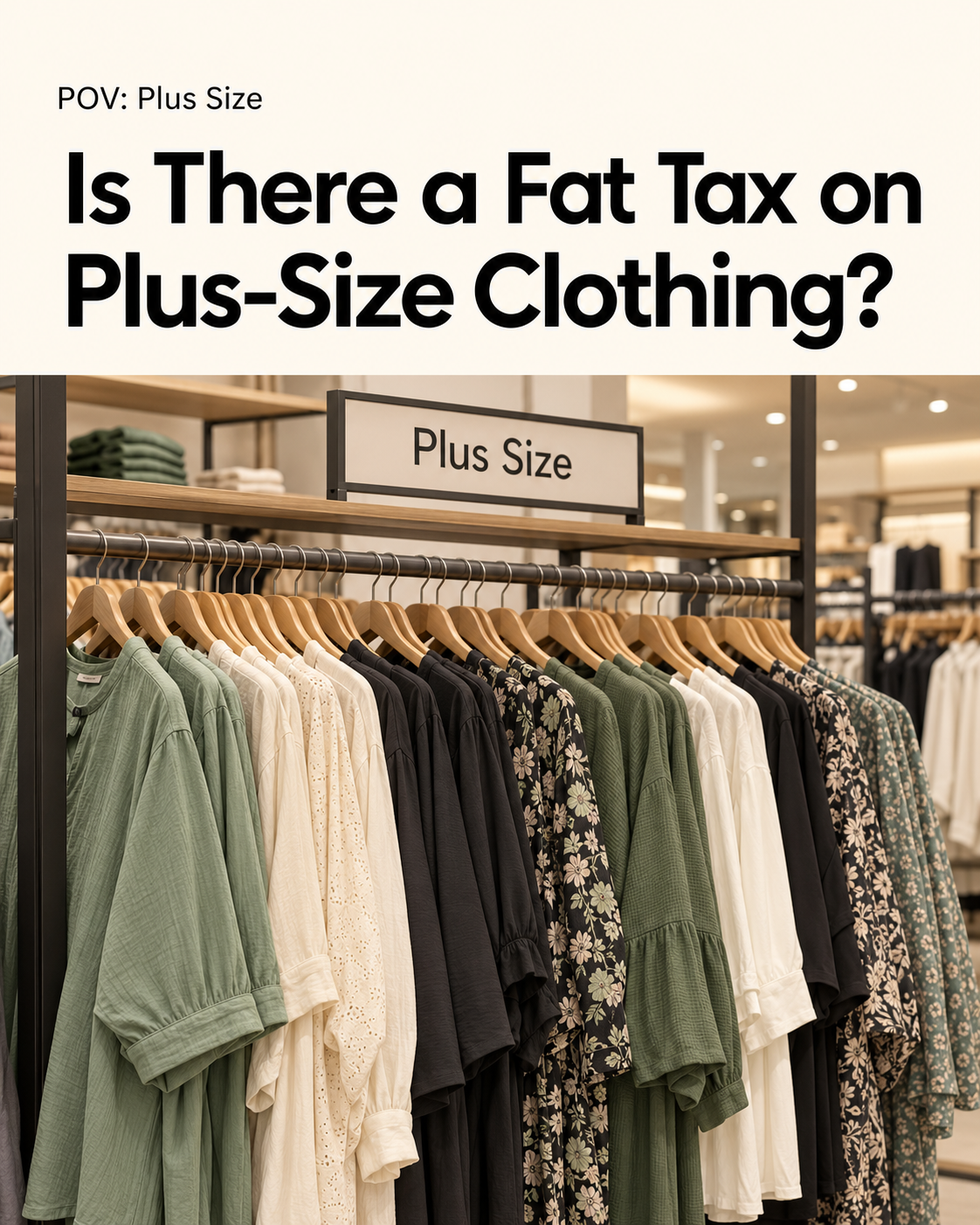
You spot a top you like. Simple, reasonably priced, exactly the sort of thing your wardrobe needs. Then you check the sizes. Nothing for you. Over in the plus size section, the search starts again, and so does the familiar question: why does finding something ordinary have to feel like such a project?
“Fat tax” usually means charging more for the same garment in a larger size. But that definition misses something: the cost of having fewer affordable choices in the first place.
A matching price tag means little if the inexpensive clothes you wanted were never available in your size.
The extra cost may be built into the selection
The debate has a documented history. In May 2018, New Look faced criticism after shopper Maria Wassell found green striped trousers priced at £22.99 in its plus size range, compared with £19.99 in standard sizes. The retailer said it was reviewing its pricing structure.
That £3 difference helps explain why the phrase stuck. It does not establish what New Look charges today. But finding an affordable exception does not answer the bigger question: what does the whole department offer?
The useful comparison is the lowest price and the typical price within equivalent categories. How many everyday tops can you choose from on the same budget? Are the inexpensive options genuinely available, or are they clearance leftovers in a handful of sizes?
Imagine a regular section offering several £3 basics while its plus size counterpart starts at £9. That is an illustration, not a finding from these checks. But it shows how a shopper could pay more without any identical garment carrying a surcharge.
A department-level comparison is needed before claiming that pattern across retailers. Still, it is the right question to ask. Your budget stretches according to the clothes you can actually buy.
Paying more should not mean settling
Then comes the frustration of finding your size, paying the price and discovering that the garment still disappoints.
Thin material. A neckline that will not sit properly. Sleeves that pull when you reach forward. Plenty of width, but somehow not enough room where you need it.
Poor quality exists at every size. The difference, when alternatives are limited, is how much harder it becomes to walk away.
There is also the weariness of browsing a supposedly new collection and feeling that you have seen those prints and shapes before. Familiar favourites have their place. But wanting something fresh should not mean having to abandon your budget.
Repeated designs are a concern worth investigating across collections, rather than a proven industry-wide pattern. The human frustration is easier to recognise: you want to choose clothes because they feel like you, not because they are the least disappointing option.
Getting something over your body is a fairly low bar for fashion.
When the fitting room becomes your bedroom
For shoppers whose local stores do not carry their sizes, home delivery becomes a necessity rather than a convenience. You cannot try on what is not on the rail. Your bedroom becomes the fitting room, with parcels arriving and returns waiting by the door.
That is why delivery belongs in this conversation.
Next’s usual home-delivery charge is £4.95 without its delivery subscription. Its £6 T-shirt would therefore cost £10.95 ordered alone and delivered. Selected postal and collection return methods cost £2.50; Next says the delivery charge is refunded when the whole order is returned.
H&M lists a £2.99 postal return fee per brand, while eligible H&M purchases can be returned to its stores without that fee.
These charges apply across sizes. But when your size pushes the search online, or you need several attempts to find a comfortable fit, they can become part of your clothing budget.
Alterations may add another expense. Shortening trousers or adjusting a waist can rescue something you love. Paying again to make an already disappointing purchase wearable feels rather different, and tailoring cannot improve an unpleasant fabric.
The freedom to be choosy
So, is there a fat tax on plus size clothing? Historical examples show that direct premiums have existed. The current spot-check does not establish a universal surcharge or higher department-wide median prices.
But equal prices on a few garments are not the same as equal access to an affordable wardrobe.
The request is modest: decent fabric, thoughtful fit, some variety and the freedom to reject something without wondering whether you will find an alternative.
If two women walk into the same shop with the same budget, do they both get to be equally choosy?
More from POV: Plus Size